The home office isn’t just a desk anymore. It’s a mirror of how we live now – half in reality, half in deadlines. That corner of your home isn’t background; it’s a stage. It carries your thoughts, habits, and moods. After all, the chair that supports your back also supports your day.
A proper home office doesn’t have to be expensive or full of gadgets. It has to feel intentional. The walls don’t need to scream productivity; they should whisper focus. Maybe it’s the smell of fresh coffee or the sound of a morning playlist that makes you sit down and start typing. Whatever your ritual is, design should protect it.
Forget the endless reels of “perfect setups.” They lie. A good workspace isn’t about chasing symmetry or buying matching accessories. It’s about friction, comfort, and flow. The space must move with you – when you lean back to think, when you grab your notes, when the sun shifts across your screen.
So before you open your laptop again, ask yourself: does this room support me, or am I surviving inside it? Because a truly comfortable home office doesn’t just make work easier. It makes you feel more like yourself.
1. Claim your space, even if it’s small
The first mistake most people make? They just drop their laptop on the dining table and call it an “office.” That’s not space. That’s survival. You need borders.
A rug under your desk, a bookshelf turned sideways, a screen that separates you from the kitchen noise – all these tiny tricks define zones.
Even rearranging a sofa to mark your corner can shift your brain from “living” to “working.” That’s the secret of spatial design – how the eye reads a room before the mind catches up. It’s not just walls. It’s psychology.
2. Light isn’t decoration
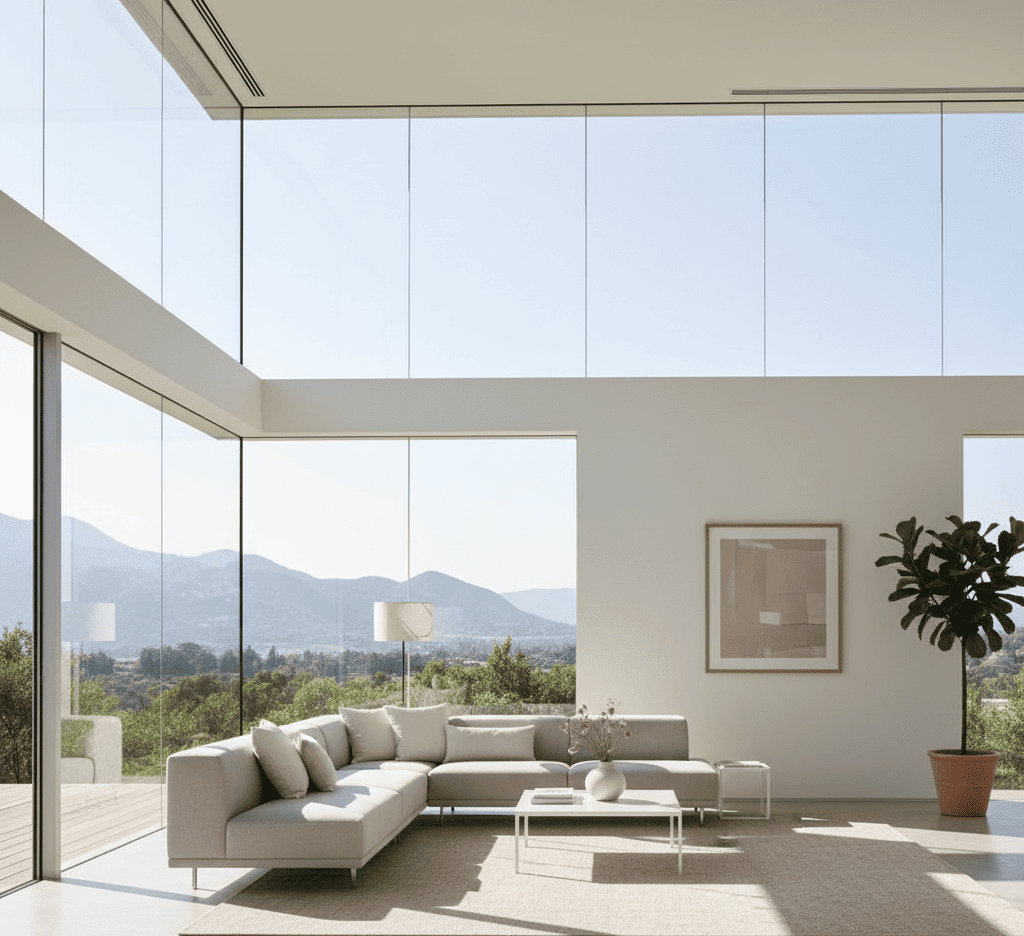
Natural light is oxygen. If it’s behind you, your screen glares. If it’s ahead, your face darkens on calls. Side light is the sweet spot.
The new trend in contemporary interiors is to mix task light with ambient warmth – one to work, one to breathe.
A cool-toned desk lamp keeps you sharp. A warm indirect LED softens the atmosphere once the day ends. Don’t be afraid of experimenting with rhythm. Light isn’t static – it’s mood in motion.
3. Rethink your layout like an architect
Your space has bones. Invisible, but they’re there. Corners where thoughts get trapped, walls that echo too much, paths you walk without noticing. Most people ignore that geometry. They shove a desk against a wall and wonder why they feel drained.
The key is flow. Every step you take in your room is part of its choreography. The way your chair swivels toward the light, the route from your notebook to your shelf – all of that shapes how your brain organizes information. The layout isn’t decoration; it’s cognition.
Here’s what defines a strong home-office layout:
| Principle | Meaning | How to Apply |
|---|---|---|
| Visual balance | Each zone should have its own “center” | Use a plant, lamp, or wall art to anchor each section |
| Natural direction | Spaces should follow light and motion | Place your desk where daylight feels alive |
| Breathing room | Avoid dense furniture clusters | Keep at least 70–80 cm of free path behind the chair |
| Function zoning | Separate work, rest, and storage | A rug, partition, or even shelf line helps define borders |
| Eye flow | Let the gaze move without stops | Avoid tall blocks right next to your monitor |
And if you like lists better, remember these three small rules:
- Keep your circulation open – the mind follows motion.
- Align your desk with light, not just power outlets.
- Give your space a focal point that quietly says: this is where work begins.
Even the smallest adjustments – like rotating the desk 30 degrees or moving your chair closer to the wall – can completely change how the room feels. It’s not about perfection; it’s about permission. A good layout gives you permission to think freely without the space fighting back.
4. Mix structure with warmth
Timber, linen, brushed steel. Every texture whispers a different rhythm. One article on mass timber design explained that the warmth of natural materials stabilizes focus.
Wood in interiors isn’t nostalgia – it’s balance. You can have a glass-and-metal setup, but without a tactile anchor, your brain drifts.
Try combining sleek furniture with natural textures. Even a wooden coaster or woven mat adds subtle grounding. That’s what architects call biophilic design: feeding the senses with quiet reminders of nature.
5. Declutter with intention
Minimalism doesn’t mean emptiness. It means decision. Every object left on your desk tells your brain a story: You still need to do this. So it’s no wonder people feel anxious.
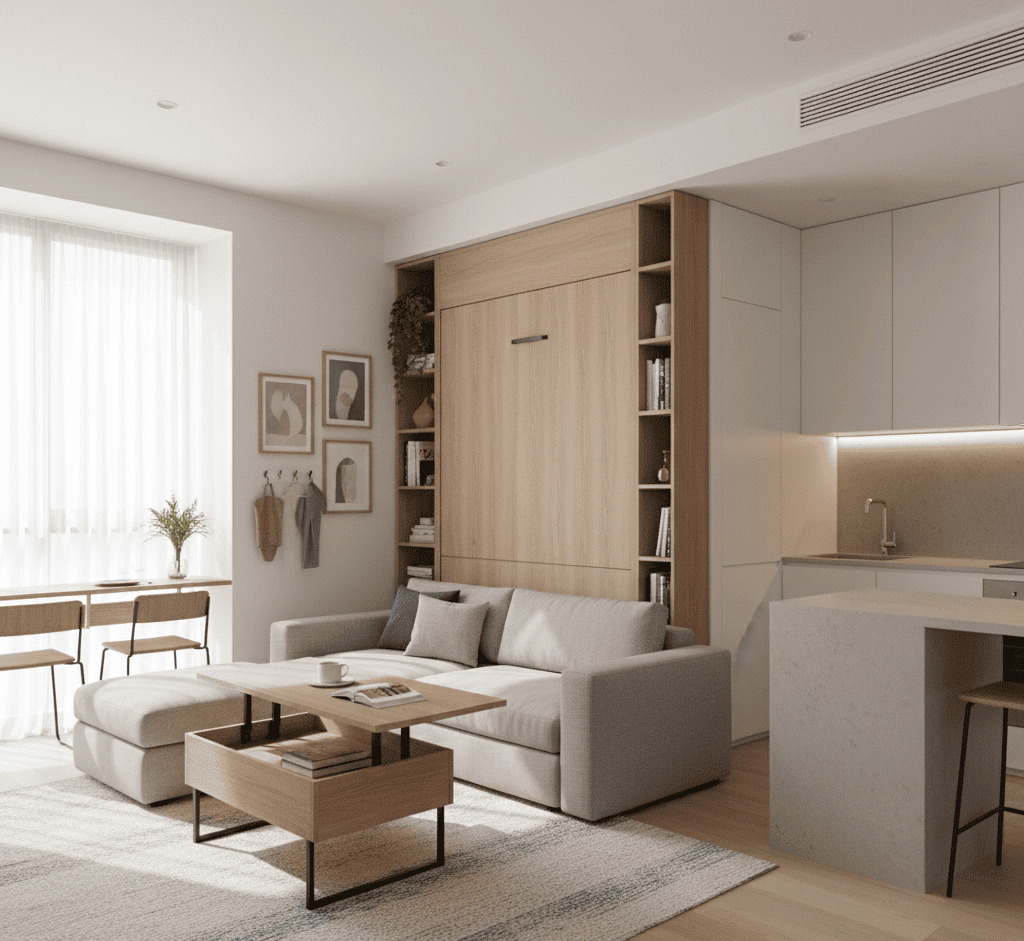
A few multifunctional furniture pieces – drawers under the desk, wall shelves that hide cables – can transform the mess into calm.
And please, stop chasing aesthetic perfection. Clean isn’t sterile. A little chaos keeps it human.
6. Quiet is design too
Noise kills focus faster than bad lighting. I’ve seen people wrap blankets around doors or buy the thickest curtains possible. It works, but there’s a more elegant way.
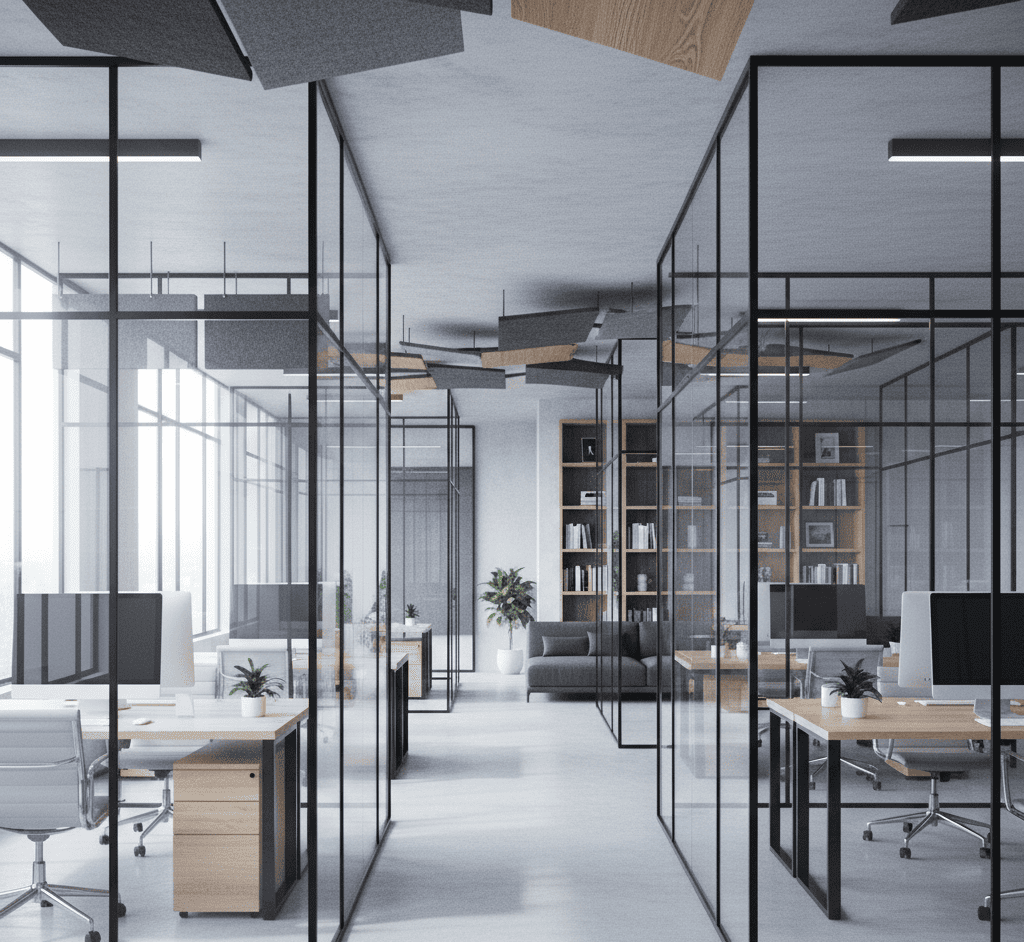
Acoustic comfort has become a core of modern soundproof glass partitions and layered materials. They muffle chaos without sealing you away.
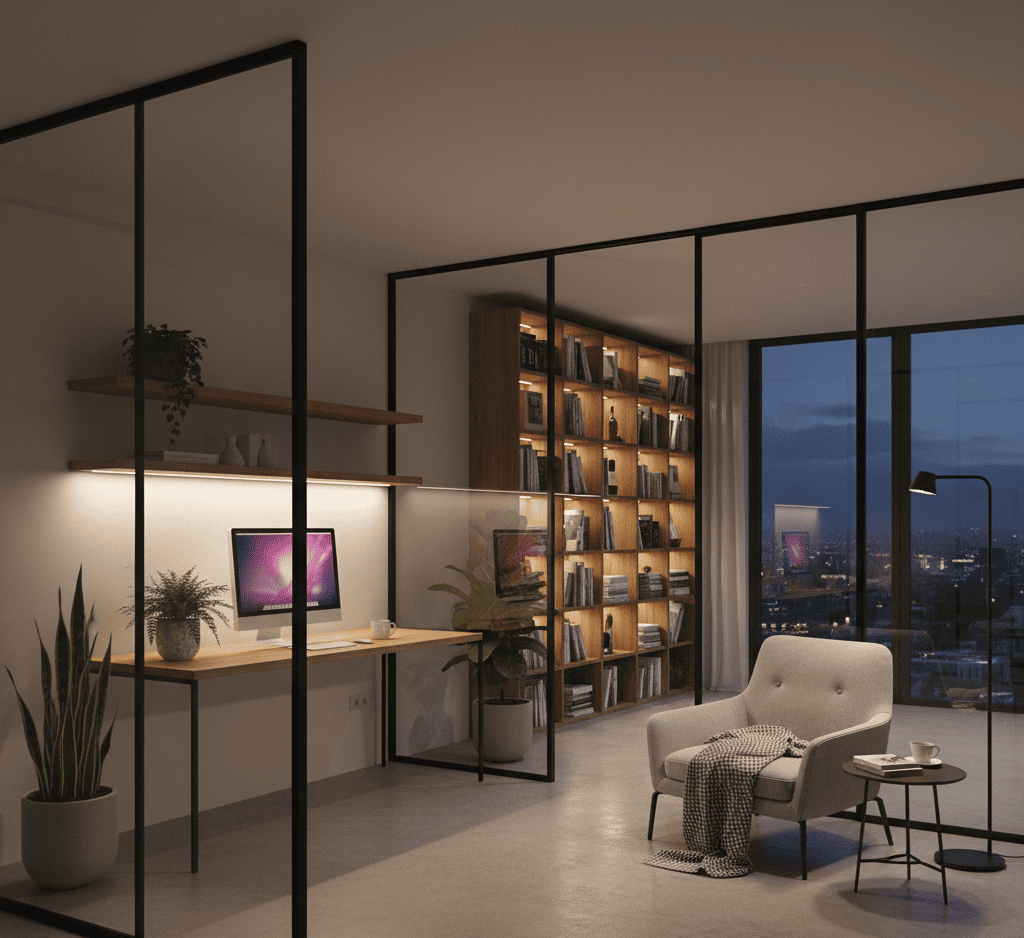
And that’s where my favorite principle fits perfectly: Home office glass partitions help separate the workspace from the living area without overloading the interior.
They let you see life happening around you while keeping your own rhythm contained.
7. Add emotion, not trends
Trends are the sugar rush of design. They thrill you for a moment, then leave you hollow. Emotion, on the other hand, lingers. It’s the curve of a chair that reminds you of your grandmother’s kitchen, the way afternoon light lands on your old ceramic mug. That’s what makes a space yours.
Forget sterile catalog looks. The best interiors are full of quiet contradictions. A rough wooden stool next to a sleek desk. A messy stack of books beside a minimalist lamp. Imperfection makes the room breathe.
Here’s a quick contrast between trend-based and emotion-based design:
| Approach | How It Feels | Result |
|---|---|---|
| Trend-based | Perfect, polished, predictable | Feels staged and temporary |
| Emotion-based | Textured, layered, real | Feels lived-in and authentic |
| Trend-based | Fast to impress | Fades fast |
| Emotion-based | Built slowly | Grows deeper over time |
And if you want to bring more emotion into your space, try this:
- Keep one imperfect object on your desk – something personal.
- Add a texture that contrasts with everything else (linen, cork, paper).
- Use warm light, not bright light – it flatters flaws.
- Let at least one memory stay visible, even if it doesn’t match the palette.
When you design with emotion, you’re not decorating – you’re remembering. And that memory shows up as warmth. The goal isn’t to impress. It’s to feel anchored. Because every home office is secretly a portrait of its owner – half logic, half chaos, and somehow, beautifully alive.
8. Bring in layers, not clutter
Layered design isn’t stacking furniture – it’s rhythm between textures and tones. Start with base colors (gray, beige, soft clay), then add depth through materials: felt chair, oak shelf, matte lamp.
That idea came from an article about material innovation and how subtle differences in texture guide our perception of comfort.
Your space doesn’t need a “wow” object. It needs balance. Let surfaces whisper rather than shout.
9. Movement matters
Stillness looks productive, but it’s a trap. The longer you sit frozen, the duller your mind gets. Movement is energy, and energy is focus. That’s why the best workspaces are built for motion – not running marathons, but small shifts that keep the body awake and the brain firing.
Try alternating between standing and sitting. Keep a notebook away from your screen so you have to reach for it. Let light pull you toward the window now and then. It sounds small, but it breaks monotony before it breaks you.
Designers have started rethinking offices with flexibility in mind, and that idea is flowing home. A chair that pivots easily, a small side table you can drag near sunlight, a mobile cabinet instead of fixed drawers – they all feed motion. Even the air feels fresher when the room allows you to move.
The old rule was “sit still to focus.” The new one? Move a little to think clearer. You’ll notice it: your breathing evens out, your thoughts untangle, your work feels less like endurance and more like rhythm. The space begins to work with you, not against you.
10. Let light and shadow coexist
Not every corner should be bright. Darkness adds dimension. A softly lit reading corner or dim alcove gives the eyes a break and the mind a pause.
Even in small apartments, you can carve zones through contrast.
In one luxury bathrooms feature, designers spoke about ambient lighting shaping mood like perfume – barely visible but transformative. Apply that at home: gentle light gradients create intimacy without clutter.
Beyond the checklist
When people ask me what makes a home office “feel right,” I never talk about brands. It’s all about flow. You should feel movement even in stillness. The light should guide you, not fight you.
Modern interiors are more emotional than technical now. Designers speak about biophilic design and ecological design not as trends but as human necessities. Spaces that breathe are spaces that last.
And yes, comfort is subjective. For one person, it’s soft jazz and plants. For another, it’s an industrial lamp and cold metal edges. That’s fine. What matters is ownership.
Design is just storytelling through space. Yours should sound like you.

FAQ
1. How can I make my home office feel larger?
Use mirrors, vertical storage, and light-colored walls to expand perception. Keep sightlines open, avoid bulky furniture, and let natural light travel freely.
2. What’s the best lighting for long work hours?
Mix cool task lighting with warm ambient sources. Side-mounted lights reduce glare and help maintain consistent brightness throughout the day.
3. Are glass partitions practical at home?
Yes. They divide zones without cutting off light or visibility. They also add acoustic control while keeping the design open.
4. How do I balance minimalism with coziness?
Choose fewer but more meaningful objects. Use textures – wood, linen, wool – to soften sleek surfaces and add emotional warmth.